How to Invest in Impossible Foods Stock?
Contents
- How to Invest in Impossible Foods Stock
- The Basics: What is Impossible Foods?
- Who Created Impossible Foods?
- What Makes Impossible Foods so Successful?
- What is the History of Impossible Foods?
- What is the Environmental Impact of Impossible Foods?
- Is Impossible Foods Profitable?
- Top 10 Impossible Foods Facts:
- Conclusion
- Sources
How to Invest in Impossible Foods Stock
Impossible Foods is one of the best-known plant-based meat companies, so many people want to know how to buy its stock. The short answer: Impossible Foods is a private company, so ordinary investors can’t buy its shares on a stock exchange.
Plant-based meat has been one of the most talked-about food trends of the past decade. Supporters expect it to win more of the meat market as prices fall and products improve. Sales across the category have been uneven, though, and no one knows how big the market will get.
This article answers common questions about Impossible Foods’ stock. Does Impossible Foods have a publicly traded stock? If not, is it possible to invest in Impossible Foods? Let’s find out.
The Basics: What is Impossible Foods?
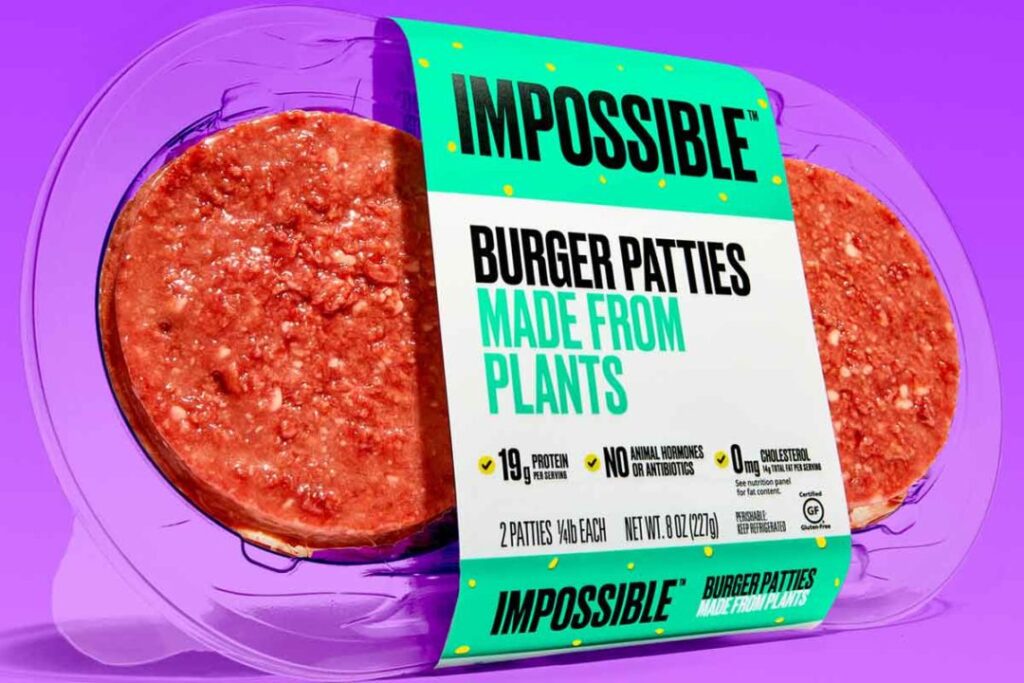
Impossible Foods makes meat substitutes from plants. Its products include Impossible Beef, sausage, pork, meatballs, chicken nuggets and hot dogs.
A key ingredient is heme, a molecule that helps give meat its flavor. Impossible makes its heme by fermenting genetically engineered yeast, and the FDA has reviewed its safety.
Impossible publishes nutrition comparisons on its ingredients page. Per serving, it lists Impossible Beef with 0 mg of cholesterol and 4.2 mg of iron, compared with 80 mg of cholesterol and 2.2 mg of iron for 80/20 ground beef. Impossible Beef has much more sodium, though: 370 mg versus 75 mg.
Supporters of plant-based meat point to animal welfare and the environmental footprint of industrial livestock farming. Impossible says its products have a far lower environmental impact than meat from animals.
Who Created Impossible Foods?
Impossible Foods was founded by Pat Brown, a former professor of biochemistry at Stanford University. He also co-founded Kite Hill, a maker of plant-based dairy alternatives. Brown founded Impossible Foods in 2011 and later stepped down as CEO.
What Makes Impossible Foods so Successful?
Impossible’s main differentiator is heme, which helps its products look, cook and taste more like beef. The company has also built wide distribution through grocery stores and restaurant partners.
Its best-known partnership is the Impossible Whopper at Burger King, which launched nationally in 2019 and brought plant-based burgers to a mainstream fast food audience.
What is the History of Impossible Foods?
Pat Brown started Impossible Foods in 2011 after a sabbatical from Stanford spent looking for a way to replace animal agriculture. The company spent years on research before launching the Impossible Burger in restaurants in 2016.
Demand outran supply at times, notably in 2019 after the Burger King launch. Since then, Impossible has expanded into grocery stores and added products such as sausage, chicken nuggets, pork and hot dogs.
What is the Environmental Impact of Impossible Foods?
The environmental case is one of the main selling points for plant-based meat. Raising cattle uses large amounts of land and water and produces significant greenhouse gas emissions.
Impossible says its products have a much lower environmental impact than beef from cows, based on its own life-cycle assessments. Those figures come from the company, so treat them as company claims rather than independent findings.
Is Impossible Foods Profitable?
We don’t know. Impossible Foods is private and doesn’t publish audited financial statements, so its revenue and profits aren’t public.
Its most recent publicly reported funding rounds date to 2021. Valuations from private rounds don’t tell you what the company is worth today.
Top 10 Impossible Foods Facts:
- Impossible Foods was founded in 2011 by former Stanford biochemistry professor Pat Brown.
- Its beef gets much of its meaty flavor from heme, made by fermenting genetically engineered yeast.
- The company makes beef, sausage, pork, meatballs, chicken nuggets and hot dogs from plants.
- Soy is the main protein source in its products, and every Impossible product contains soy.
- Some products, including the chicken nuggets and hot dogs, contain wheat and gluten.
- Per serving, Impossible Beef lists 0 mg of cholesterol versus 80 mg in 80/20 ground beef.
- Impossible Beef lists 4.2 mg of iron per serving, compared with 2.2 mg in 80/20 ground beef.
- It is higher in sodium than plain ground beef: 370 mg versus 75 mg per serving.
- Burger King’s Impossible Whopper made Impossible a household name in 2019.
- Impossible Foods remains privately held, so its shares don’t trade on a public exchange.
How can I invest in Impossible Foods stock? As of October 2026, Impossible Foods is still privately held and isn’t traded on any stock market. If it ever goes public, you’d be able to buy shares through a regular brokerage account.
When will Impossible Foods IPO? Impossible Foods hasn’t announced an IPO date. Earlier media predictions of a 2021 or 2022 listing didn’t happen. Watch for an official company announcement or a public registration filing rather than rumors.
What is Impossible Foods’ valuation? Since the company is private, there’s no market price. The last publicly reported funding round was in 2021, and that figure is now dated.
Are there any other ways to invest in Impossible Foods stock? Before an IPO, private shares are generally limited to accredited investors. Under the SEC’s accredited investor definition, an individual qualifies with a net worth over $1 million, not counting their primary residence.
You can also qualify with income over $200,000 (or $300,000 jointly with a spouse or spousal equivalent) in each of the last two years, with a reasonable expectation of the same this year. Certain professional credentials designated by the SEC also qualify.
Accredited investors may be able to buy shares from early investors or employees through secondary market platforms such as EquityZen and Forge Global. These shares can be hard to value, hard to sell and subject to company transfer restrictions. Be wary of anyone offering “pre-IPO” shares outside a registered broker-dealer.
Conclusion
Impossible Foods is a leading name in plant-based meat, but it remains a private company. To invest now, you’d need to be an accredited investor buying through a secondary market platform. Everyone else will have to wait for an IPO that hasn’t been announced.
Investing in any single company carries risk. If you’re unsure whether an investment fits your situation, talk to a licensed financial professional.
Sources
- Our ingredients (nutrition comparison), Impossible Foods
- 17 CFR 230.501, Definitions and terms used in Regulation D, Electronic Code of Federal Regulations