What is Ethereum and Why Does it Matter?
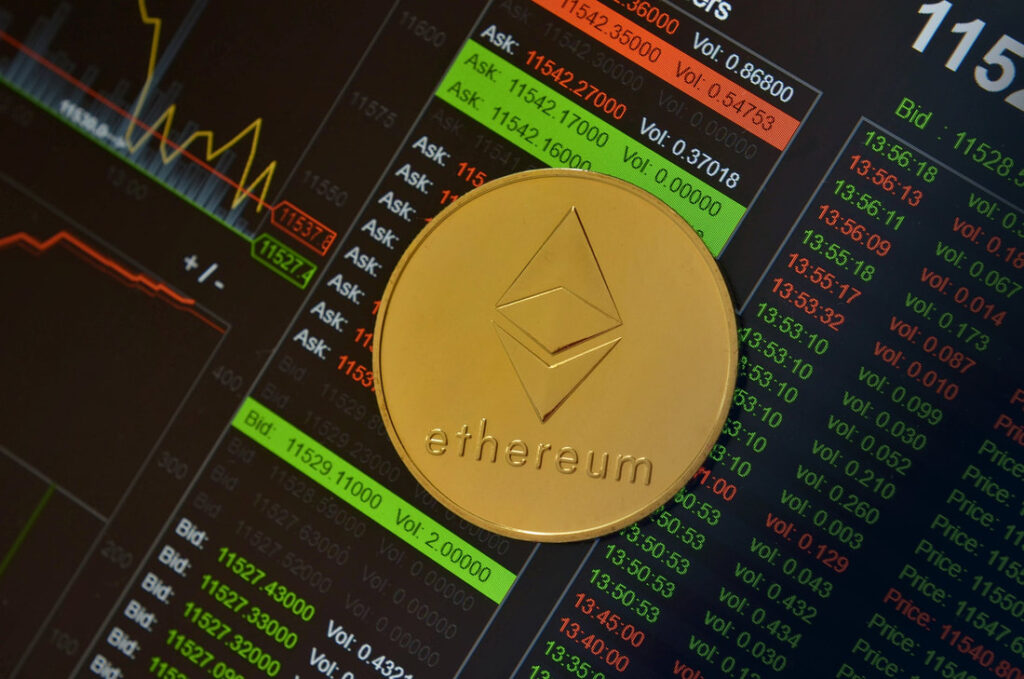
Ethereum is a blockchain network, and ether (ETH) is its cryptocurrency. ETH has long been the second-largest cryptocurrency by market value, behind Bitcoin, and Ethereum is home to many of the dapps, tokens, NFTs and smart contracts in use today.
Ethereum works like Bitcoin in some ways, but it can do things Bitcoin was not designed to do. Vitalik Buterin described it in a white paper published in 2013, and the network launched on July 30, 2015. Ethereum is a popular platform for decentralized applications (dapps) and hosts many other tokens, including NFTs.
Ethereum (ETH) History
Vitalik Buterin is a Russian-Canadian programmer who co-founded Bitcoin Magazine before proposing Ethereum. He wanted a blockchain that could run general-purpose programs, not just track payments. Ethereum was launched with a group of co-founders and has since been developed by many independent teams.
Ethereum's key feature is that you can program smart contracts on it. A smart contract runs automatically when its conditions are met, without a middleman.
Smart contracts are small programs stored on the blockchain. Many can't be changed once deployed, which makes their behavior predictable but means bugs are hard to fix. For example, a contract can release funds on a certain date or only after certain conditions are met.
Almost any condition that can be checked by code can be built into a smart contract. Data from the outside world, such as the weather, has to be supplied by a service called an oracle.
Ethereum also hosts other tokens and, in the past, many ICOs. ICOs, or initial coin offerings, were a popular way for crypto projects to raise money around 2017. Regulators have since cracked down on many of them, and many ICO projects failed or turned out to be scams, so be very cautious with any token sale.
Every Ethereum transaction requires a fee, called gas, paid in ETH. Gas fees can be expensive when the network is busy, so small transactions may not be worth the cost. Many users now use "layer 2" networks built on top of Ethereum to pay lower fees.
Ethereum 2.0 and Proof of Stake
"Ethereum 2.0" was the old name for Ethereum's move to proof of stake. The name has been dropped, and ethereum.org says the term "Eth2" has been deprecated. The switch, called The Merge, was completed on September 15, 2022.
Before The Merge, Ethereum used proof of work. Miners competed to solve hard math problems to add blocks and earn new ETH, the same basic system Bitcoin still uses.
Under proof of stake, validators lock up ETH as a stake instead of mining. Running your own validator requires depositing 32 ETH, though staking pools let people take part with less. In each 12-second slot, one validator is chosen at random to propose a block, and committees of other validators vote on whether it is valid. Validators who act dishonestly can lose part of their stake.
Proof of stake is far more energy efficient. According to ethereum.org, The Merge cut Ethereum's energy use by about 99.95%.
The Merge did not make Ethereum faster or lower gas fees on its own. ethereum.org says it was a change of consensus mechanism, not an expansion of network capacity. Ethereum is instead scaling through later upgrades and layer 2 networks.
How to Obtain Ethereum
Since The Merge, ETH can no longer be mined. You can earn ETH by staking, but most people buy it.
To buy ETH, you sign up with a cryptocurrency exchange, which lets you trade dollars or other currencies for crypto. Coinbase and Kraken are well-known U.S. exchanges; check that any exchange is licensed to operate where you live. ETH's price often moves in the same direction as Bitcoin's, but not always and not by the same amount.
Crypto is not a bank deposit. The FDIC says crypto assets are not FDIC-insured, even when bought through a bank. The SEC warns that crypto investments can be exceptionally volatile and speculative. Invest carefully, and never invest more than you can afford to lose.
Sources
- The Merge, ethereum.org
- Proof-of-stake (PoS), ethereum.org
- Timeline of all Ethereum forks, ethereum.org
- Exercise Caution with Crypto Asset Securities: Investor Alert, SEC Investor.gov