How to Pay Down and Ultimately Eliminate Credit Card Debt
Credit card debt is one of the easiest things to accumulate and one of the hardest to get rid of. A clear plan can get you out of it for good, and here’s how.
Credit cards make it fast and convenient to buy the things we need, but they also make it fast and convenient to buy the things we don’t. Responsible spending habits are an absolute must when you have a credit card. Once you’ve accumulated credit card debt, it can take years of painful payments to eliminate.
Think about it. Did that new pair of pants or shoes make you lastingly happier? Probably not. Shopping can still feel rewarding in the moment, which is why spending habits are hard to break even when you know they’re hurting you.
Minimum payments also make card debt hard to pay off. They’re set low, so much of each payment goes to interest and only a little to the principal you owe. Paying only the minimum means barely making progress.
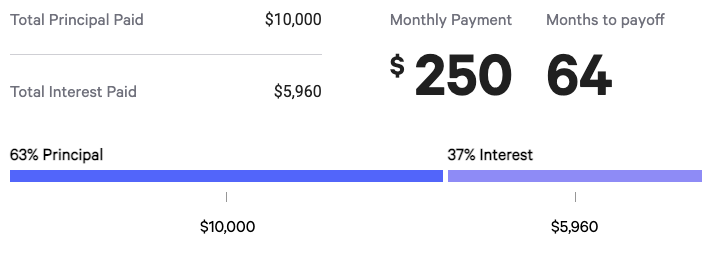
Let’s do a simple math problem to illustrate the point: If you owe $10,000 on a credit card with an 18.99% APR, and a $250 minimum monthly payment…
- You’d spend 64 months (or over 5 years) paying off the balance
- You’d spend about $5,960 in interest (nearly 60% of the balance you started with)
That’s with a fixed $250 payment and interest compounded monthly. Many cards charge more: the Federal Reserve’s consumer credit report puts the average rate on card accounts charged interest at roughly 22% in 2026. At 22%, the same payoff takes about 73 months and costs about $8,190 in interest.
If you’re in credit card debt and want to get it under control, pay it off, and stop credit card debt from accumulating again, the following tips are for you.
1. Get Spending Under Control Credit cards are easy to use, and you only face the total at the end of the month. So the first step out of credit card debt is getting your spending under control. Be strict about what you need and what you don’t, especially for things like clothes, drinks, meals out and accessories.
If you don’t trust yourself with the cards, leave them at home and carry only the cash you need. Some people cut up their cards; if you do, consider keeping the oldest account open, since closing it can affect your credit history.
2. Get a Holistic View of your Financial Situation and Create a Budget How can you get where you’re going without understanding how you’ll get there? This is why it’s important to get a holistic view of your financial situation if you’re really serious about getting out of credit card debt. In essence, this means gathering all your credit card bills, utility bills, other loans you owe money on, and a history of all your spending for the last year or so. Then you can sit down, total up all the income you have. This is your starting point, and you absolutely must spend less than this amount.
Next, total all your expenses, and categorize them into “Necessary,” “Nice to Have,” and “Unnecessary.” These will help you see where you’re wasting money that could be used to help you pay off your credit card debt.
- Necessary expenses: Housing, transportation, food (groceries only, not dining out), utilities, education, and cell phone.
- Nice to Have expenses: Video streaming services (Netflix et al.), music streaming services (Spotify et al.), gym membership.
- Unnecessary expenses: Bars and restaurants, alcohol, cable TV, video games, sporting events, etc. If it doesn’t clearly meet the definition of necessary, it’s probably an unnecessary expense.
It may help to ask a financially savvy friend or family member, a financial planning professional, or a nonprofit credit counselor for help. The CFPB notes that credit counseling organizations can advise you on managing money and paying off debt. The conversation can be embarrassing or awkward, but it will be helpful in two ways. First, the obvious is that you’ll get a clear picture of what steps you can take to curtail your credit card debt. The second is less obvious, but it’s that you’ll have told someone else and will therefore have some accountability to that person. If you have a conversation with a trusted friend, then show up with a new pair of shoes, you’re probably going to get called out on it. That accountability will help you stay true to your mission of getting out of credit card debt.
Using this information, you can now create a budget. In its simplest form, your budget can be the total amount you’re able to spend each month on each category (ex. $500/month for groceries).Write it down so you can refer to it as needed, and even consider putting it on the refrigerator or somewhere else that you’ll see it regularly. Stick to those amounts. You can also automate tracking with a budgeting app. Mint.com used to be a popular choice, but Intuit has since folded Mint’s features into Credit Karma, so pick a current app that monitors your spending and alerts you when you go over.
3. Consolidate Your Credit Card Debt Consolidation can be a powerful step: combining your card balances into one monthly payment at a lower interest rate. You’ll have one balance to track, and a lower rate means more of each payment goes to principal.
Rates vary a lot. A 0% balance transfer offer is the cheapest if you qualify. The Fed’s data shows the average 24-month personal loan rate at commercial banks was around 12% in 2026, lower than the average card rate but far from zero.
The CFPB’s guide to consolidating credit card debt has a key warning: if you’re in debt because you spend more than you earn, consolidation probably won’t help unless you cut spending or raise income.
Option 1: 0% Interest Balance Transfer Offers on Credit Cards Many card issuers offer 0% or low promotional rates on balance transfers to win new accounts. You move the balance from one or more cards to the new card and pay little or no interest during the promotional period.
Read the terms first. The CFPB says you’ll probably pay a balance transfer fee, usually a percentage of the amount transferred or a fixed amount, whichever is more. The promotional rate ends after a set time, and then the rate rises.
Avoid new purchases on the same card: they may not get a grace period, so you could pay interest on them right away. And if you’re more than 60 days late on a payment, the issuer can raise the rate on all balances, including the transferred one.
Issuers know that someone who ran up a balance on one card may do it again on the next. Don’t fall into that trap. Balance transfers work only if you stop adding new debt.
Option 2: A Personal Loan From a Bank If you can’t get a 0% balance transfer card, or you don’t trust yourself with a new card, a debt consolidation loan from a bank or credit union is another option. You borrow enough to pay off your card balances, then repay the loan in fixed monthly payments, ideally at a lower rate than your cards.
Compare the APR and fees, not just the monthly payment. A longer loan term can lower the payment but raise the total interest you pay.
Be careful with secured loans. If you put up your car or another asset as collateral and can’t repay, you could lose it.
The biggest risk is feeling like your cards are “clear” and running them up again. You still owe the money; you’ve just moved it to a cheaper loan. Stick with your decision to stop spending on things you don’t need.
4. Be rigorous in your new budget, and avoid falling into old habits. Once you’ve consolidated and are paying down your debt, don’t slip back into old habits. Stick to your new budget, and build emergency savings so a surprise bill doesn’t end up on a card again.
Once your balances are paid off, set up automatic payments for the full statement balance each month so you never pay interest again. Until then, leave your cards at home if you don’t trust yourself to keep them in your wallet.
Tell your friends and family about your new budget too. You can be direct and say you’re getting out of credit card debt, or simply say you have a budget and you’re sticking to it.
Sources
- What do I need to know about consolidating my credit card debt?, Consumer Financial Protection Bureau
- What is a balance transfer fee?, Consumer Financial Protection Bureau
- Consumer Credit - G.19, Board of Governors of the Federal Reserve System